English
What are the different weaves of woven fabric?
Woven fabric is made by interlacing two sets of threads—the warp (running lengthwise) and the weft (running crosswise)—on a loom. The way these threads cross each other determines the weave structure, which in turn controls how the fabric looks, feels, and performs. There are three foundational weave types: plain weave, twill weave, and satin weave. Every other woven fabric construction is either a variation of these three or a combination of them. Understanding each type helps you choose the right fabric for clothing, upholstery, technical textiles, and beyond.
Woven fabrics differ fundamentally from knit fabrics. While knits are formed by looping a single yarn, woven fabrics require at least two yarn systems working perpendicular to each other. This structure gives most woven fabrics their characteristic stability, limited stretch on the grain, and crisp drape. From a lightweight cotton voile to a dense Kevlar weave used in body armor, the underlying logic of over-and-under thread interlacement is the same.
Content
- 1 Plain Weave: The Most Common Woven Fabric Structure
- 2 Twill Weave: Diagonal Lines and Superior Drape
- 3 Satin Weave: Smooth Surface and Lustrous Appearance
- 4 Dobby Weave: Small Geometric Patterns Built Into the Fabric
- 5 Jacquard Weave: Complex Figured Patterns and Pictorial Textiles
- 6 Leno Weave: Open, Gauze-Like Woven Fabric
- 7 Pile Weave: Cut and Uncut Loops for Texture and Softness
- 8 Double Cloth Weave: Two Layers Woven as One
- 9 Comparison of Major Woven Fabric Weave Types
- 10 How Thread Count and Yarn Weight Interact With Weave Structure
- 11 Specialty and Technical Woven Fabric Constructions
- 12 Choosing the Right Weave for Your Project
Plain Weave: The Most Common Woven Fabric Structure
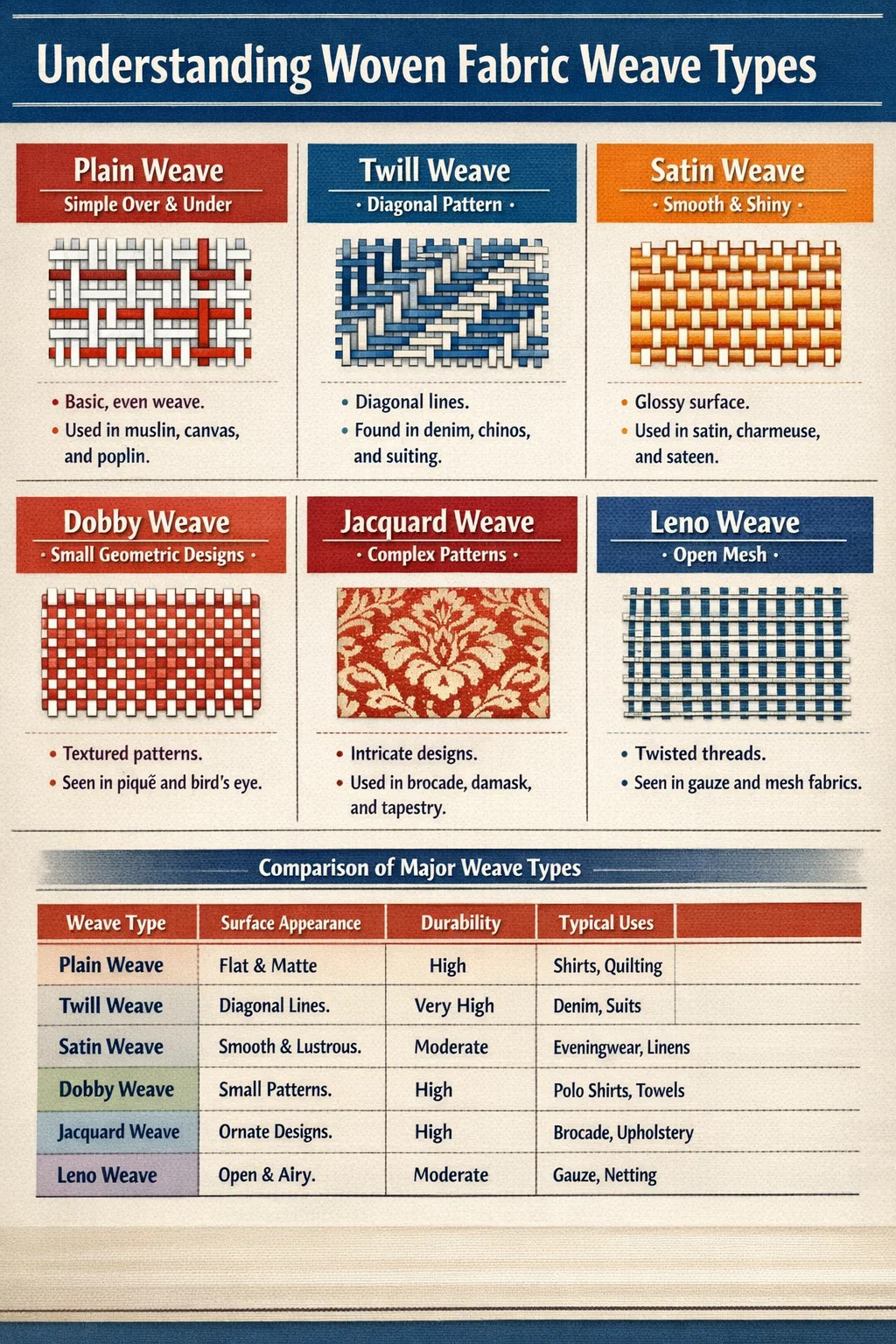
Plain weave is the simplest and most widely used of all weave types. Each weft thread passes alternately over and under each warp thread, creating a tight, uniform grid pattern. The repeat is just 2×2—one warp thread up, one down—making it the most economical weave to produce on any loom.
Plain weave accounts for roughly 80% of all woven fabric produced globally. Its tight interlacing gives it high durability and little tendency to fray, which is why it appears in everything from cotton muslin and linen canvas to polyester taffeta and silk chiffon. The fabric has a flat, matte surface with no visible diagonal lines, and both faces look identical.
Variations of Plain Weave
Plain weave has two well-known structural variations that alter the visual texture without changing the fundamental over-under logic:
- Basket weave: Two or more warp and weft threads are grouped and woven as one. Oxford cloth, used in dress shirts, is a classic 2×2 basket weave. The result is a more textured, slightly looser surface compared to a standard plain weave.
- Rib weave: Ribs or cords run in one direction—either warp or weft—by using heavier yarns or grouping threads. Poplin (also called broadcloth) has fine horizontal ribs created by a higher warp thread count. Ottoman fabric has pronounced horizontal ribs formed by thick weft yarns.
Common plain weave fabrics include muslin, voile, chiffon, organza, taffeta, poplin, flannel (when woven before napping), and most basic cotton quilting fabric. Each differs in yarn weight, fiber type, and thread count rather than in weave structure.
Twill Weave: Diagonal Lines and Superior Drape
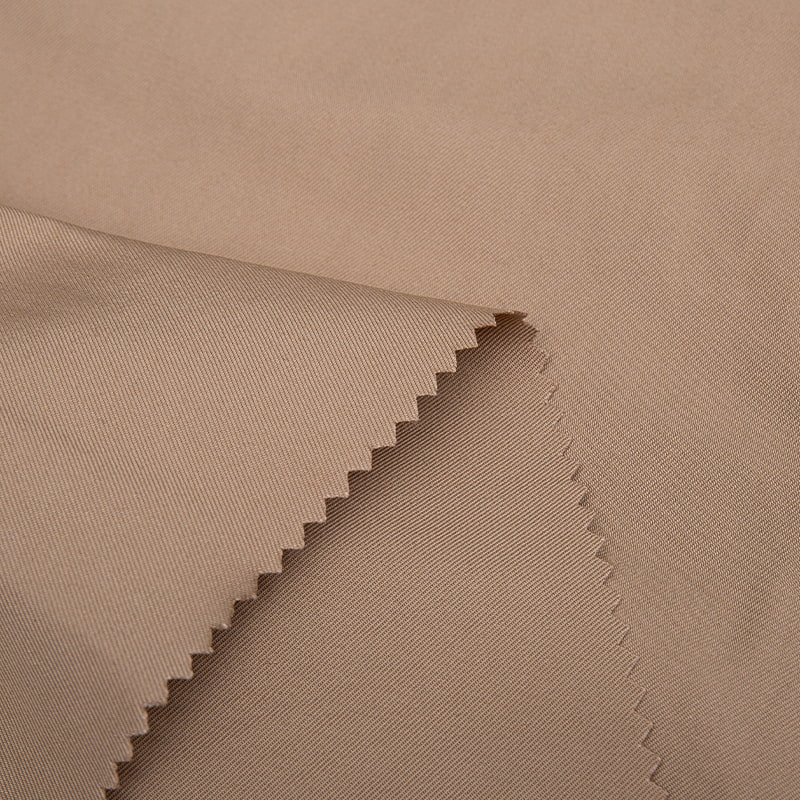
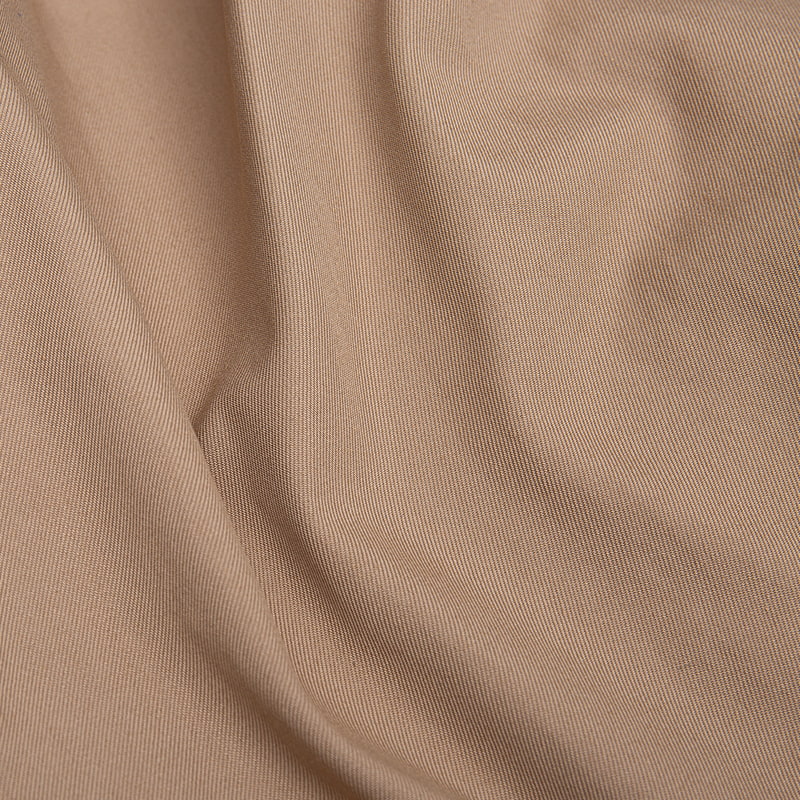
Twill weave is identified by its characteristic diagonal rib or line on the fabric surface. The weft thread passes over one or more warp threads and then under two or more, with each row offset by one thread to create the diagonal pattern. The simplest twill is a 2/1 (two over, one under), but 2/2, 3/1, and 4/1 twills are all common in commercial fabric production.
Because the threads interlock less frequently than in plain weave, twill fabrics can be woven more densely, resulting in a heavier, more pliable hand with better drape and wrinkle resistance. Denim, one of the world's most recognized fabrics, is a 3/1 warp-faced twill—meaning the warp (traditionally indigo-dyed) floats over three weft threads, making the face predominantly blue while the reverse is mostly white.
Types of Twill Weave
- Regular (S or Z) twill: The diagonal runs either from lower left to upper right (Z-twill) or lower right to upper left (S-twill). Most denim uses a Z-twill (right-hand twill).
- Herringbone twill: The diagonal reverses direction at regular intervals, creating a V-shaped zigzag resembling a herring's skeleton. This pattern is classic in wool suiting and tweed fabrics.
- Broken twill: The diagonal is deliberately interrupted, as in houndstooth, producing geometric patterns rather than continuous lines.
- Diamond twill: Diagonal lines from both directions intersect to form diamond shapes. Some traditional wool plaids use this structure.
- Elongated twill: Used in gabardine, where a steep twill angle (around 63 degrees) produces the fabric's sharp, fine diagonal rib and extremely smooth surface.
Key twill fabrics: denim, chino, gabardine, tweed, flannel (woven version), cavalry twill, serge, and drill. Twill is the dominant weave in workwear and tailoring because its structure resists tearing—the diagonal alignment of threads distributes stress more effectively than a plain weave grid.
Satin Weave: Smooth Surface and Lustrous Appearance
Satin weave is constructed so that warp threads float over four or more weft threads (or vice versa) before passing under one. The binding points are spread far apart and never adjacent, which means long yarn segments lie on the surface with minimal interlacement. This produces the characteristic smooth, glossy face that satin is known for.
It is important to distinguish between satin (a weave structure) and sateen (a closely related structure). In satin weave, the warp threads form the floats on the face of the fabric. In sateen weave, the weft threads float on the face. Cotton sateen bedsheets use weft floats; traditional silk satin uses warp floats. The visual result is similar—both have a shiny face and a duller back—but the yarn direction and handling properties differ.
Satin Weave Counts and Variations
Satin fabrics are defined partly by their float length, expressed as a number. A 5-shaft satin has floats of 4 (over 4, under 1). An 8-shaft satin has floats of 7, creating an even smoother surface but less structural integrity. Common commercial satin weaves include:
- Charmeuse: A lightweight satin-weave fabric (usually silk or polyester) with a highly lustrous face and a crepe-like back. Widely used in lingerie, evening wear, and blouses.
- Duchess satin: A heavier, stiffer satin with a high sheen. Common in bridal gowns and structured eveningwear.
- Cotton sateen: A weft-faced sateen weave in cotton, producing a soft, smooth surface used in bed linens. Thread counts of 300–600 are typical.
- Antique satin: Uses slubbed or irregular yarns in the weft to create a subtly textured surface while retaining the satin structure.
Because the long floats are not anchored by frequent interlacement, satin weave fabrics snag more easily than plain or twill fabrics. They also tend to be less breathable due to their dense surface construction. Despite these limitations, their visual appeal and smooth touch make them irreplaceable in luxury and formal textile applications.
Dobby Weave: Small Geometric Patterns Built Into the Fabric
Dobby weave is produced on a loom equipped with a dobby mechanism, which allows individual groups of warp threads to be raised in complex sequences beyond what a basic treadle loom allows. The result is a fabric with small, geometric, repeating patterns—dots, diamonds, small florals, or geometric motifs—woven directly into the structure rather than printed or embroidered.
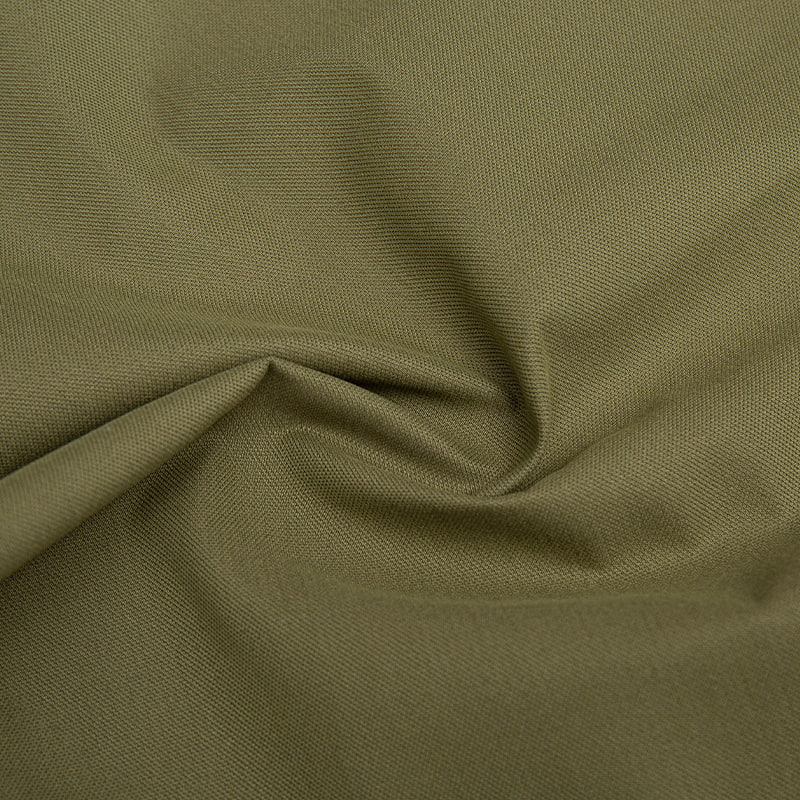
Piqué is one of the most recognized dobby weave fabrics. Its raised parallel cords or waffle-like textures are created by the dobby mechanism weaving extra warp threads that form floats on the back, pushing the face threads into ridges. Cotton piqué is the standard fabric for polo shirts; its textured surface and breathability made it a practical choice for sportswear as early as the 1920s.
Other dobby fabrics include bird's-eye piqué (small diamond pattern), huckaback (used for towels due to its absorbent texture), and many shirting fabrics with small woven geometric patterns. Modern electronic dobby looms can control each warp thread independently, allowing extremely intricate small-repeat patterns that were not practical with mechanical dobby heads.
Jacquard Weave: Complex Figured Patterns and Pictorial Textiles
Jacquard weave takes patterning to its most complex level. A Jacquard loom (invented by Joseph Marie Jacquard in 1804 and later refined with digital controls) allows every single warp thread to be controlled independently in every pick (weft insertion). This makes it possible to weave photographic-quality images, large floral motifs, complex figurative scenes, or any arbitrary pattern with no repeat-size limitation.
Jacquard weaving was the direct precursor to punch-card computing; Charles Babbage drew on the Jacquard card system when designing his Analytical Engine. Today, digital Jacquard looms operate with computer files instead of punch cards, allowing designers to weave patterns with thousands of colors and unlimited complexity.
Well-known Jacquard fabrics include:
- Brocade: A rich fabric with raised patterns that appear embossed. Traditional brocade uses supplementary weft threads that float over the background weave to form the pattern, creating a textured, three-dimensional effect. Used in formal garments, upholstery, and religious vestments.
- Damask: A reversible Jacquard fabric where the pattern is formed by contrasting satin and sateen areas on the same ground. The pattern appears on both sides, but in reverse (what is shiny on the front is matte on the back). Widely used in table linens, drapery, and upholstery.
- Tapestry: Woven pictorial fabric with a weft-faced structure, traditionally used for wall hangings and upholstery. The weft threads of different colors are woven back and forth only where each color appears in the design rather than across the full width.
- Matelassé: A double-cloth Jacquard fabric with a quilted or blistered appearance created by differential shrinkage or extra yarn structures. Common in upholstery and evening jacket fabrics.
Leno Weave: Open, Gauze-Like Woven Fabric
Leno weave (also called gauze weave) is an open-structure weave where pairs of warp threads are twisted around each other between weft insertions, locking the weft threads in place. The twisted warp prevents the open structure from shifting or slipping, which would be a problem in a loosely woven plain weave.
This weave produces fabrics with defined open spaces—a mesh-like appearance—while maintaining dimensional stability. Leno weave is used in surgical gauze, mosquito netting, theatrical scrims, fruit and vegetable packaging nets, and some lightweight summer shirting fabrics. The open weave maximizes air circulation, making it practical for hot climates or any application requiring breathability combined with some structural integrity.
Marquisette is a classic leno-weave fabric used in sheer curtains and bridal veils. Some woven fabric products combine leno sections with plain-weave sections to create patterned sheerness within a single cloth.
Pile Weave: Cut and Uncut Loops for Texture and Softness
Pile weave creates a fabric with a three-dimensional surface of loops or cut fibers projecting above a woven base. There are two main types:
- Warp pile: Extra warp threads are woven over wires or rods that create loops. When the wires are removed, the loops remain (terry cloth, velvet formed over wires). When a knife on the wire cuts the loops as it is withdrawn, the result is cut pile (velvet).
- Weft pile: Extra weft threads float over the ground weave and are then cut to create a short, dense pile. Corduroy is woven this way—the cut weft floats form the cords or wales that run lengthwise.
Terry cloth (uncut loop pile) can absorb up to 27 times its own weight in water, which explains its universal use in towels and bathrobes. The loops maximize surface area exposed to moisture. Velvet, a cut warp-pile fabric, has been a luxury textile since at least the 14th century; its dense, even cut pile scatters light in a way that creates the characteristic depth of color.
Pile height, density, and direction all affect the performance and appearance of pile fabrics. Velvet must be cut with the pile running consistently in one direction to avoid shading differences. Corduroy wale count (the number of ribs per inch) ranges from wide wale (fewer than 8 wales per inch) to pinwale (more than 16 per inch), with each variation having distinct hand and visual weight.
Double Cloth Weave: Two Layers Woven as One
Double cloth consists of two separate layers of woven fabric produced simultaneously on the same loom, connected at the selvages or at intervals across the width by binding threads or by interchanging warp and weft threads. The result is a fabric that is thicker and warmer than a single layer, with a reversible face and back that can use different colors, fibers, or weave structures on each side.
Melton wool overcoat fabric, many high-quality double-faced wool coats, and some technical fabrics (where one layer provides moisture wicking and the other provides insulation) use double cloth construction. Matelassé is technically a form of double cloth where the layers are joined at intervals, creating the raised blister effect.
Some double cloths can be separated into two independent fabrics after weaving—this technique is used to produce two layers of velvet simultaneously, with the pile threads cut as the shuttle passes between the two layers. This was once the primary method of industrial velvet production.
Comparison of Major Woven Fabric Weave Types
The table below summarizes the key properties and common uses of each major weave type to make direct comparison easier.
| Weave Type | Surface Appearance | Durability | Typical Uses |
|---|---|---|---|
| Plain Weave | Flat, even, matte | High | Shirts, linings, quilting, canvas |
| Twill Weave | Diagonal ribs | Very High | Denim, chino, suits, workwear |
| Satin/Sateen Weave | Smooth, lustrous | Moderate (snag-prone) | Eveningwear, bed linens, lingerie |
| Dobby Weave | Small geometric texture | High | Polo shirts, towels, dress shirts |
| Jacquard Weave | Complex figured patterns | High | Brocade, damask, tapestry, upholstery |
| Leno Weave | Open mesh/gauze | Moderate | Gauze, netting, sheers, packaging |
| Pile Weave | Looped or cut surface fibers | Variable | Towels, velvet, corduroy, carpet |
| Double Cloth | Two-faced, thick | Very High | Overcoats, technical fabrics, blankets |
How Thread Count and Yarn Weight Interact With Weave Structure
Weave structure alone does not determine how a woven fabric performs. Thread count (the number of warp and weft threads per inch) and yarn weight (expressed as a count number in different systems) interact with the weave to define fabric density, hand, and performance.
A plain weave fabric woven from fine yarns at 200 threads per inch is a lightweight voile; the same plain weave using coarse yarns at 60 threads per inch produces canvas. Both are plain weave. Similarly, a 2/1 twill in fine merino wool becomes a smooth suiting cloth, while the same twill structure in heavy cotton yarn becomes drill fabric used for work trousers and military uniforms.
Thread count in sateen bedsheets is frequently inflated by counting multi-ply yarns as multiple threads, leading to misleading marketing figures. A sateen sheet with genuinely high-quality single-ply yarns at 400 threads per inch will outperform a sheet marketed as 1000 thread count if the latter uses thin 4-ply yarns counted as four threads each. Understanding weave structure helps consumers evaluate these claims more accurately.
Specialty and Technical Woven Fabric Constructions
Beyond traditional textile applications, weave engineering has expanded into technical and industrial domains where precise weave architecture determines structural performance rather than aesthetics.
3D Woven Structures
Three-dimensional woven fabrics interlock multiple layers of warp and weft in complex architectures. These structures are used as preforms in composite materials for aerospace, wind turbine blades, and automotive parts. Because the fibers run in multiple directions within a single integrated structure (rather than as separate stacked layers), 3D woven composites resist delamination far better than laminated 2D fabrics. Boeing and Airbus both incorporate 3D woven carbon fiber preforms in aircraft structural components.
Narrow Woven Fabrics
Ribbons, webbings, tapes, and elastic bands are all narrow woven fabrics produced on specialized narrow-width looms. Seat belt webbing, for example, is a dense plain or twill weave in high-tenacity polyester designed to absorb enormous impact energy while preventing elongation. Narrow woven structures also include hook-and-loop fasteners, shoe laces, watchbands, and medical bandages.
Woven Geotextiles and Filter Fabrics
Plain weave and leno weave constructions in polypropylene or polyester form geotextile fabrics used in road construction, drainage, erosion control, and retaining wall applications. The weave structure determines the aperture size (opening size), which controls what particle sizes pass through and what are retained—critical for filtration and separation functions in civil engineering.
Choosing the Right Weave for Your Project
When selecting a woven fabric, the weave type should match the functional and aesthetic demands of the end use. Consider the following practical guidance:
- For durability and everyday wear: Plain weave and twill weave fabrics hold up best. Denim (twill), canvas (plain), and poplin (plain with rib) are reliable choices for items that will see frequent use and laundering.
- For drape and fluid movement: Twill weave (especially in lighter weights like charmeuse twill) and satin weave fabrics drape more fluidly than tightly woven plain fabrics at the same fiber content.
- For luxury appearance: Jacquard woven fabrics (brocade, damask) and satin weaves deliver visual richness that other weaves cannot replicate with the same fiber.
- For warmth without excess weight: Double cloth and certain pile fabrics trap air more effectively than single-layer plain weaves of the same total weight.
- For moisture management: Terry cloth (loop pile) is optimal for absorbency. Open leno weaves maximize breathability. Dense satin weaves minimize moisture movement.
- For upholstery: Jacquard fabrics, tight twills, and double cloths resist abrasion better than loose plain weaves. The Martindale abrasion test score (measured in rubs) is the standard benchmark—domestic upholstery typically requires 15,000+ rubs; contract upholstery requires 30,000+.
No single weave is objectively superior. The right choice depends entirely on balancing appearance, performance, cost, and the physical demands placed on the finished woven fabric product.
 PREV
PREV