English
What Is the Most Common Woven Fabric? Plain Weave Explained
Content
- 1 The Most Common Woven Fabric: Plain Weave Leads the Industry
- 2 What Makes a Fabric "Woven"
- 3 Plain Weave: Why It Dominates Woven Fabric Production
- 4 Twill Weave: The Second Most Common Woven Fabric Structure
- 5 Satin Weave: The Luxury End of Woven Fabric
- 6 Comparing the Three Main Woven Fabric Types Side by Side
- 7 Specialty Woven Fabrics Built from the Three Base Structures
- 8 The Role of Fiber Content in Woven Fabric Performance
- 9 Thread Count in Woven Fabrics: What It Actually Means
- 10 Woven Fabric in Industrial and Technical Applications
- 11 How to Identify a Woven Fabric by Its Structure
- 12 Frequently Asked Questions About Woven Fabrics
The Most Common Woven Fabric: Plain Weave Leads the Industry
Plain weave fabric is, without question, the most common woven fabric in the world. It is the simplest and most widely used weave structure, where each weft thread passes alternately over and under each warp thread. This interlocking pattern creates a tight, stable textile that is used across virtually every industry — from fashion and home textiles to industrial filtration and medical supplies. According to industry estimates, plain weave accounts for over 60% of all woven fabric produced globally.
Understanding why plain weave dominates the market requires a closer look at the full landscape of woven fabrics — how they are made, what distinguishes one from another, and where each type genuinely excels. Whether you are sourcing textiles for a clothing line, upholstery project, or industrial application, knowing the common weave types and their real-world performance differences makes a practical difference in your decisions.
What Makes a Fabric "Woven"
Woven fabrics are created on a loom by interlacing two sets of yarns at right angles to each other. The lengthwise yarns are called the warp, and the crosswise yarns are called the weft (also known as the fill). The specific pattern in which these yarns cross determines the weave structure, and that structure directly affects the fabric's texture, strength, stretch, appearance, and end-use suitability.
Unlike knitted fabrics, which are made from a single yarn looped continuously, woven fabrics have a defined structure with minimal stretch on the grain lines (though they have some bias stretch). This structural stability makes them the preferred choice for tailored garments, technical textiles, home furnishings, and many industrial applications. The global woven fabric market was valued at approximately USD 250 billion in 2023, with demand continuing to grow driven by the apparel, home textile, and technical textile sectors.
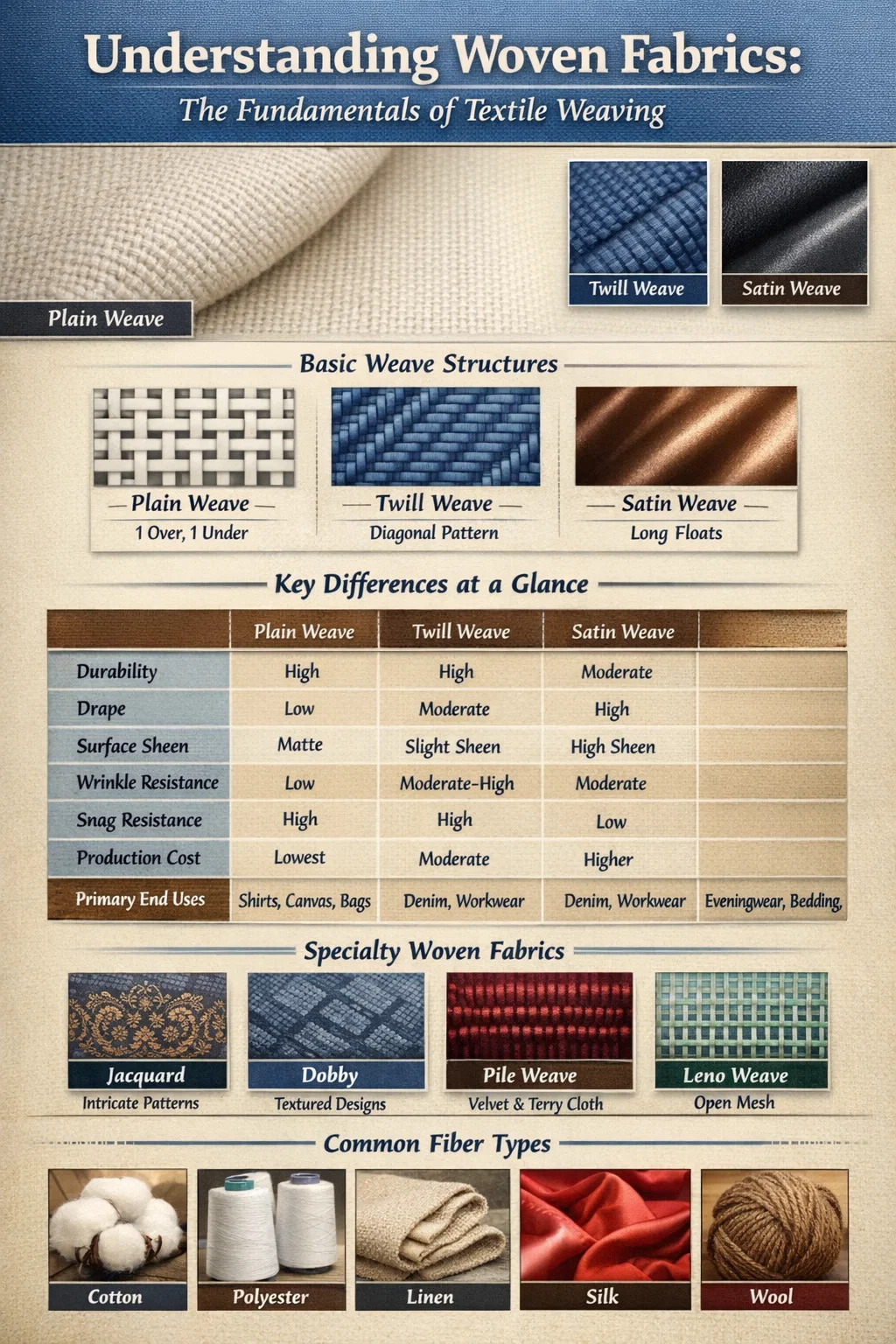
There are three primary weave types that form the foundation of nearly all woven textiles: plain weave, twill weave, and satin weave. Every other woven structure — from canvas to velvet to jacquard — is derived from or built upon these three fundamental categories.
Plain Weave: Why It Dominates Woven Fabric Production
Plain weave is built on the simplest interlacing principle possible: one over, one under, repeated across the entire fabric width. Every weft thread crosses every warp thread alternately, and the next row reverses the pattern. This creates a checkerboard-like grid structure that is remarkably consistent and efficient to produce.
Why manufacturers prefer plain weave
- It requires the least complex loom setup, reducing production costs significantly.
- The weave structure is highly stable, meaning fabrics resist distortion during cutting and sewing.
- Both sides of the fabric look identical, which simplifies cutting layouts in garment manufacturing.
- It produces firm, flat fabric that accepts printing and dyeing uniformly.
- The structure allows for a wide range of weights — from sheer voile to heavy canvas — simply by adjusting yarn thickness and thread count.
Common plain weave fabric examples
The variety within plain weave fabrics is broader than most people realize. Each of the following is a plain weave construction, though they differ dramatically in weight, fiber content, and finishing:
- Cotton muslin — a lightweight, undyed plain weave cotton used in fashion prototyping, theatrical costumes, and as a base fabric for embroidery.
- Poplin — a plain weave with a fine horizontal rib created by using heavier weft yarns, widely used in dress shirts and formal wear.
- Canvas — a heavy, durable plain weave, originally made from hemp or linen, now often cotton or polyester; used for bags, tents, shoes, and industrial covers.
- Voile — a sheer, lightweight plain weave made from tightly twisted yarns, used in curtains, blouses, and scarves.
- Organza — a crisp, sheer plain weave typically made from silk or synthetic fibers, popular in bridal and eveningwear.
- Chiffon — a lightweight, flowing plain weave with a slightly rough feel due to alternating S- and Z-twist yarns, favored in scarves, dresses, and overlays.
- Chambray — a plain weave using colored warp and white weft (or vice versa) to create a denim-like appearance at lighter weight, common in casual shirts.
The sheer range of products achievable from plain weave alone explains its dominance. A single weave structure scales from delicate lingerie to industrial tarps simply by adjusting fiber type and yarn count.
Twill Weave: The Second Most Common Woven Fabric Structure
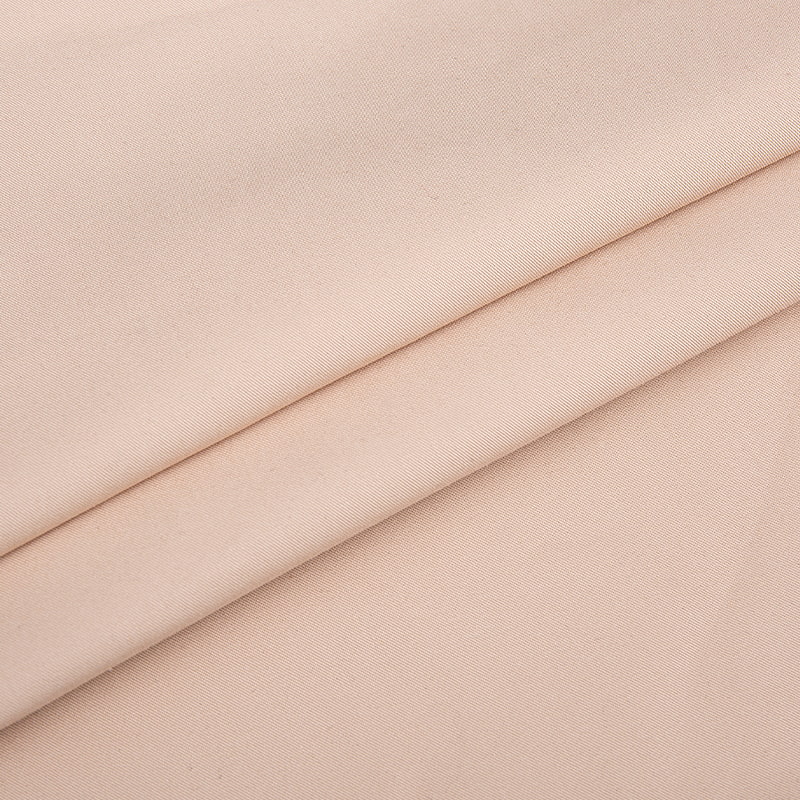
Twill weave is the second most frequently produced woven fabric type globally. Its defining feature is a diagonal rib or line visible on the fabric surface, created by each weft thread passing over two or more warp threads before going under one (or more), with each row offset by one thread. This offset progression is what produces the characteristic diagonal pattern.
Denim is the world's most recognized twill weave fabric. A standard 3×1 denim twill means each weft thread passes under three warp threads and over one, producing the classic diagonal rib visible on the face of jeans. The global denim market alone exceeded USD 87 billion in 2023, which illustrates just how significant twill weave production volume is.
Key properties of twill weave fabrics
- Greater drape and softer hand than plain weave at the same thread count.
- Higher thread count possible without excessive stiffness, resulting in denser, heavier fabrics.
- Naturally more resistant to wrinkling compared to plain weave.
- The diagonal structure makes it more durable under stress along the bias, making it ideal for workwear.
- Less prone to showing dirt and staining compared to plain weave, which is why it is favored for uniforms and outdoor apparel.
Common twill weave fabrics
- Denim — 3×1 or 2×1 cotton twill, the backbone of casual fashion worldwide.
- Gabardine — a fine, tightly woven twill with a pronounced diagonal rib; used in suits, trousers, and trench coats.
- Tweed — a rough, woolen twill with a textured surface, traditionally associated with outerwear and tailoring in colder climates.
- Serge — a smooth, two-faced twill woven from wool or silk, long used in military uniforms and formal suits.
- Chino/Twill cotton — a lighter cotton twill used in casual trousers, widely produced in Asia for global fast fashion brands.
- Herringbone — a variation of twill where the diagonal direction reverses at regular intervals, creating a V-shaped or zigzag pattern; used in suiting and home textiles.
Satin Weave: The Luxury End of Woven Fabric
Satin weave is the third fundamental woven fabric structure. It is characterized by long warp floats — meaning each warp thread passes over four or more weft threads before going under one. These long floats reflect light smoothly, giving satin its signature lustrous, slippery surface. The underside of satin fabric typically has a matte finish, making it reversible in certain applications.
It is worth clarifying a common point of confusion: satin is a weave structure, not a fiber type. Satin can be woven from silk, polyester, nylon, acetate, or even cotton. When woven from silk, it is often called silk satin. When woven from polyester, it is simply polyester satin — far more common and significantly more affordable.
Properties and limitations of satin weave
- Exceptionally smooth and lustrous face, making it the go-to choice for eveningwear, lingerie, and bedding.
- The long warp floats make satin susceptible to snagging; it is not recommended for high-friction end uses.
- Lower thread interlacing means it is less durable than plain or twill weave at comparable weights.
- Challenging to sew due to its slippery surface, requiring experienced handling in production.
- When constructed from high-quality filament yarns (silk or polyester), it has excellent drape — a key reason it remains the dominant choice for wedding and formal gowns.
Common satin weave products include charmeuse (a lightweight, soft satin with a crepe-like back), duchess satin (a heavier, structured satin used in bridal gowns), and sateen (a cotton satin variant with the floats on the weft rather than the warp, widely used in bedding and upholstery).
Comparing the Three Main Woven Fabric Types Side by Side
The table below outlines the practical differences between plain weave, twill weave, and satin weave across the properties that matter most in sourcing and production decisions:
| Property | Plain Weave | Twill Weave | Satin Weave |
|---|---|---|---|
| Durability | High | High | Moderate |
| Drape | Low–Moderate | Moderate | High |
| Surface Sheen | Matte | Slight Sheen | High Sheen |
| Wrinkle Resistance | Low | Moderate–High | Moderate |
| Snag Resistance | High | High | Low |
| Production Cost | Lowest | Moderate | Higher |
| Primary End Uses | Shirts, canvas, curtains, bags | Denim, workwear, suiting | Eveningwear, bedding, lingerie |
Specialty Woven Fabrics Built from the Three Base Structures
Beyond the three primary categories, a wide range of specialty woven fabrics exist that are derived from or combine elements of plain, twill, and satin weaves. These fabrics are engineered to deliver specific aesthetic or functional outcomes that the base weaves alone cannot achieve.
Jacquard weave
Jacquard is not a weave structure in the strict sense — it refers to the loom technology (the Jacquard loom, invented in 1804) that allows individual control of each warp thread, enabling the production of highly complex, multi-color woven patterns. Brocade, damask, and tapestry fabrics are all jacquard-woven. The pattern is permanently woven into the fabric, making it far more durable than printed designs. Jacquard fabrics are widely used in upholstery, home décor, and luxury fashion.
Dobby weave
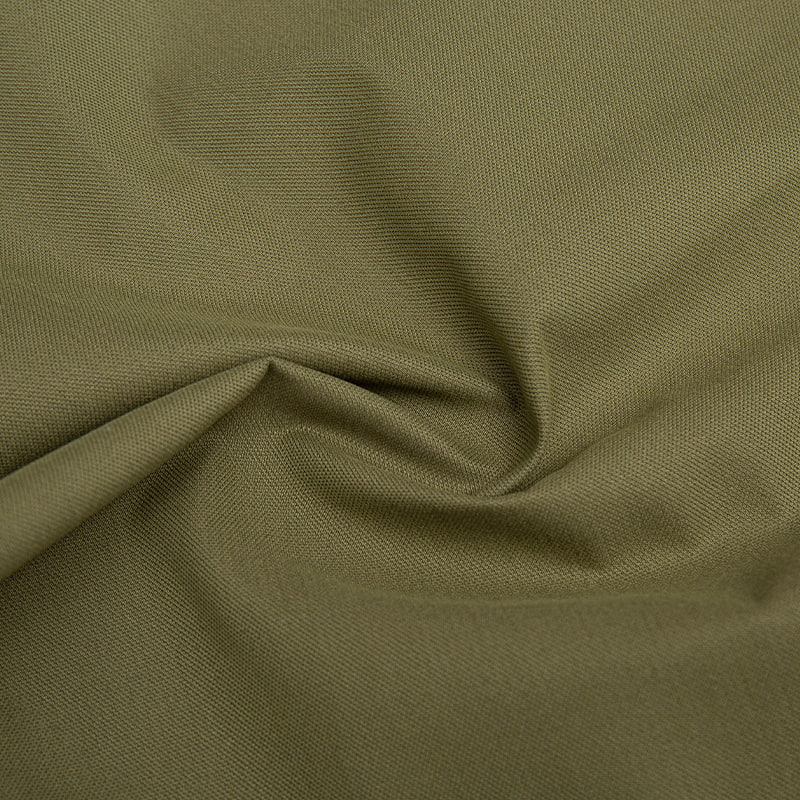
Dobby weave uses a dobby attachment on the loom to create small, geometric patterns across the fabric. Piqué and bird's eye are common dobby weaves. Piqué is the fabric used in polo shirts and is recognized by its textured, waffle-like surface. Dobby weave adds visual interest and texture with relatively modest increases in production cost compared to jacquard.
Pile weave
Pile weave creates a surface of raised loops or cut fibers that stand upright from the base fabric. Velvet, corduroy, and terry cloth are all pile woven fabrics. Terry cloth (the loop-pile structure used in towels and bathrobes) is technically a plain weave base with supplementary weft loops on one or both surfaces. Velvet uses either warp or weft threads formed into loops that are then cut, creating the characteristic soft, plush surface.
Leno weave
Leno weave (also called gauze weave) uses pairs of warp threads that twist around the weft to lock it in place, creating an open, mesh-like fabric with excellent stability. It is used in lightweight curtain sheers, mosquito netting, and as a base for embroidered textiles. The twisted warp pairs prevent the weft threads from shifting, making leno weave far more dimensionally stable than a loose plain weave at the same thread count.
The Role of Fiber Content in Woven Fabric Performance
The weave structure determines the geometry of a fabric, but the fiber content determines many of its core physical properties: how it feels against skin, how it manages moisture, how it responds to heat, and how long it lasts. The two factors work together, and neither alone tells the full story.
Cotton
Cotton is the most widely used natural fiber in woven fabric production. It absorbs moisture readily, is breathable, easy to dye, and machine-washable — qualities that make it the default choice for everyday clothing, bed linen, and household textiles. Cotton accounts for approximately 25% of global fiber consumption across both woven and knitted applications. In woven fabrics specifically, cotton is used in virtually every weave structure — plain weave cotton poplin for shirts, twill cotton for denim, sateen (satin weave) for bedding.
Polyester
Polyester is the dominant synthetic fiber globally, accounting for over 54% of global fiber production as of 2023. In woven fabrics, it is used either as 100% polyester or blended with cotton (polyester-cotton, commonly called poly-cotton) to combine the strength and wrinkle resistance of polyester with the breathability and comfort of cotton. Polyester woven fabrics dry faster, retain color better over washing, and are more resistant to shrinkage than pure cotton equivalents.
Linen
Linen, woven from flax fiber, is one of the oldest textile fibers in human history — evidence of linen fabric production dates back over 30,000 years. It is stronger than cotton, highly breathable, and naturally antibacterial. However, it wrinkles easily and can feel stiff when new. Linen is most commonly woven in plain weave for summer clothing, table linens, and upholstery.
Silk
Silk is the only natural filament fiber — the silkworm produces a continuous strand that can measure up to 1,500 meters per cocoon. This long, smooth filament is what gives silk woven fabrics their natural luster and extraordinarily smooth hand. Silk is most effectively used in satin and twill weave constructions, where the filament length can be exploited for surface reflection. China produces over 80% of the world's raw silk, making it the dominant supplier to the global luxury woven fabric market.
Wool
Wool's natural crimp gives woven wool fabrics exceptional elasticity and resilience — they return to shape after stretching. Woven wool is primarily used in twill constructions for suiting, coating, and outerwear. Worsted wool (combed to remove short fibers and create parallel long fibers) produces the smooth, fine-twill suiting fabrics used in tailoring. Woolen wool (short, carded fibers left in a more random arrangement) produces the textured, bulkier fabrics used in tweed and blankets.
Thread Count in Woven Fabrics: What It Actually Means
Thread count refers to the number of warp threads plus weft threads per square inch of fabric. It is most commonly used as a quality indicator in woven cotton bedding, where a higher thread count is often marketed as a sign of superior softness and quality. In reality, thread count tells only part of the story.
A plain weave percale sheet with a genuine thread count of 300 using single-ply combed cotton yarns will typically outperform a 600-thread-count sheet made from multi-ply or lower-quality yarns. The fiber quality, yarn spinning method, and finishing processes all contribute to the final hand and durability of a woven fabric. Thread counts above 400 in cotton woven fabrics often indicate multi-ply yarn construction rather than genuinely finer yarns, which can feel heavier and less breathable despite the higher number.
For technical and industrial woven fabrics, thread count (or more precisely, threads per inch in warp and weft separately) is a critical specification that determines filtration efficiency, tensile strength, air permeability, and other functional properties. In these applications, thread count is always specified separately for warp and weft rather than as a combined total.
Woven Fabric in Industrial and Technical Applications
The discussion of woven fabrics is incomplete without acknowledging the enormous technical textile sector, which uses woven fabric constructions for purposes far removed from fashion or home furnishings. Technical textiles account for approximately 50% of global textile production by weight, and woven structures are central to many of these applications.
Filtration fabrics
Woven fabrics are used in industrial filtration for liquids and gases. Plain weave filter cloths in polyester, polypropylene, or PTFE are specified by pore size (determined by thread count and yarn diameter) to achieve precise filtration ratings. These are used in chemical processing, food and beverage production, pharmaceutical manufacturing, and wastewater treatment.
Geotextiles
Woven geotextiles — typically heavy polypropylene plain or twill weave fabrics — are used in civil engineering for soil stabilization, erosion control, road construction, and drainage. Their high tensile strength and dimensional stability under load make woven construction preferable to nonwovens in applications requiring mechanical strength.
Composites reinforcement
Carbon fiber, fiberglass, and aramid (Kevlar) fabrics are woven — primarily in plain or twill weave — and then impregnated with resin to create composite materials used in aerospace, automotive, marine, and sporting goods applications. The weave structure determines how load is distributed across the composite panel. Carbon fiber twill weave, for example, is commonly used in high-performance bicycle frames and automotive body panels where the visible diagonal pattern has also become an aesthetic marker of performance products.
Medical textiles
Woven fabrics are used in surgical meshes, bandages, suture materials, and implantable devices. The dimensional stability and controlled porosity of woven structures are critical in these applications. Polyester and PTFE woven fabrics are commonly used for vascular grafts and hernia meshes, where biocompatibility and long-term mechanical stability under physiological conditions are required.
How to Identify a Woven Fabric by Its Structure
For anyone working with textiles — whether in product development, quality control, or procurement — knowing how to identify a weave structure by visual inspection and simple physical tests is a practical skill.
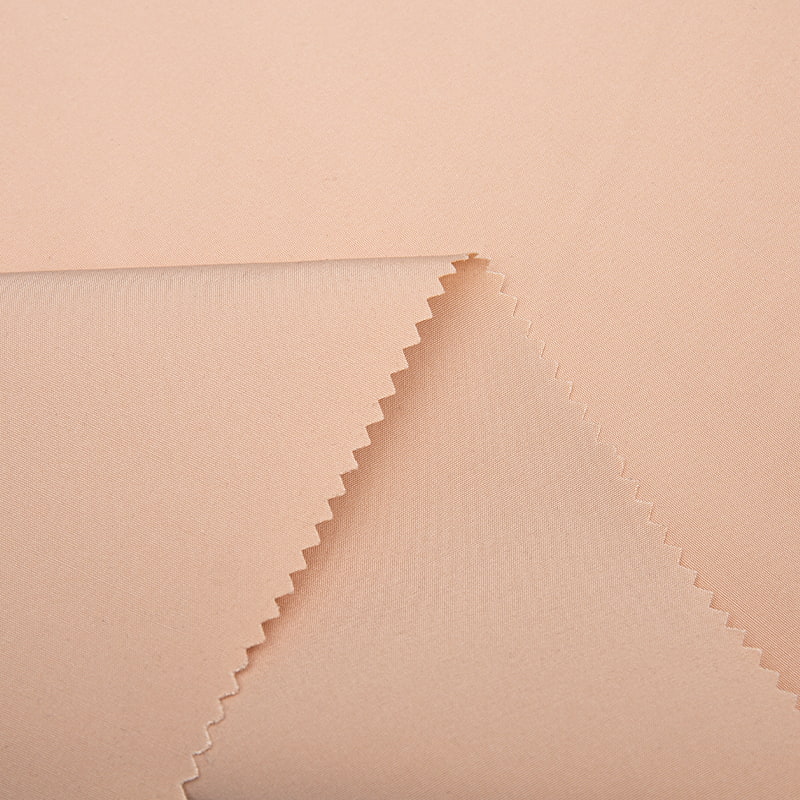
- Look for the grain lines: Woven fabrics have a clear straight grain (along the warp) and cross grain (along the weft). When you pull the fabric on these lines, there is very little stretch. On the bias (45 degrees), a woven fabric will stretch noticeably. Knit fabrics stretch easily in multiple directions without a clear grain.
- Examine the weave pattern with a loupe or magnifier: A plain weave shows a simple checkerboard pattern under magnification. A twill weave shows a clear diagonal line running at approximately 45 degrees to the selvage. A satin weave shows long floats running along the surface with widely spaced interlacing points.
- Ravel the edge: Pull a few threads from the cut edge of the fabric. Woven fabrics unravel thread by thread, revealing individual warp and weft yarns. The yarn twist direction, fiber appearance, and thread count can all be determined from these individual threads.
- Count threads per inch: Using a thread counting glass (pick glass), count the number of warp and weft threads per inch to determine the thread count and assess the fabric's density.
- Check the selvage: The selvage (the finished edge that runs parallel to the warp) of a woven fabric is tight and firm. It does not roll or curl, unlike the edge of a knit fabric. The selvage often contains brand information, width markings, or color register dots in printed wovens.
Frequently Asked Questions About Woven Fabrics
Is cotton a woven fabric?
Cotton is a fiber, not a fabric type. Cotton can be made into both woven and knitted fabrics. When people refer to "cotton fabric," they most often mean plain-weave cotton — the kind used in shirts, sheeting, and canvas. However, cotton is also used in knitted jersey (T-shirts), terrycloth (towels), and many other structures.
What is the difference between woven and non-woven fabric?
Woven fabrics are made by interlacing warp and weft yarns on a loom. Non-woven fabrics are made by bonding or entangling fibers mechanically, chemically, or thermally — without weaving or knitting. Non-wovens include materials like felt, interfacing, disposable surgical masks, and baby wipes. They typically do not have a defined grain structure and cannot be unraveled into individual threads.
Which woven fabric is the most durable?
In terms of weave structure, plain weave and tight twill weave fabrics generally offer the highest durability because every yarn is interlaced at short intervals, providing maximum resistance to tearing and abrasion. However, fiber content plays an equally important role. A heavy canvas in plain weave cotton will outlast a fine poplin in the same weave. For extreme durability, high-tenacity synthetic fibers like nylon or polyester in a tight plain or twill weave offer the best performance.
What is the most breathable woven fabric?
Breathability in woven fabrics depends primarily on fiber type and fabric weight rather than weave structure. Linen plain weave is generally considered the most breathable woven fabric for clothing, due to linen's hollow fiber structure and relatively low weave density. Lightweight cotton plain weave (muslin, voile, chambray) follows closely. Tightly woven fabrics in any structure — regardless of fiber — restrict airflow and are less breathable.
Why does woven fabric fray at cut edges?
Woven fabrics fray because the interlacing of warp and weft yarns is what holds them in place. When the fabric is cut, the cut yarns at the edge are no longer held by adjacent interlacings and pull free. The rate of fraying depends on the weave structure (plain weave frays less readily than satin due to more frequent interlacings), the fiber type (natural fibers tend to fray more than synthetics), and the yarn twist. Finishing methods like serging, pinking, French seams, or bound edges are used to manage fraying in garment construction.
What is selvedge denim?
Selvedge (or selvage) denim refers to denim woven on traditional shuttle looms, which produce a narrow fabric (typically 28–32 inches wide) with a self-finished edge on both sides. This tightly woven edge does not fray and is used as the outseam of selvedge jeans, where the finished edge is left exposed as a detail. The term "selvedge" alone simply refers to the finished edge of any woven fabric — it is the word "selvedge denim" that specifically refers to this traditional production method. Selvedge denim commands a premium price due to the slower production speeds and narrower fabric width of shuttle loom weaving.
 PREV
PREV