
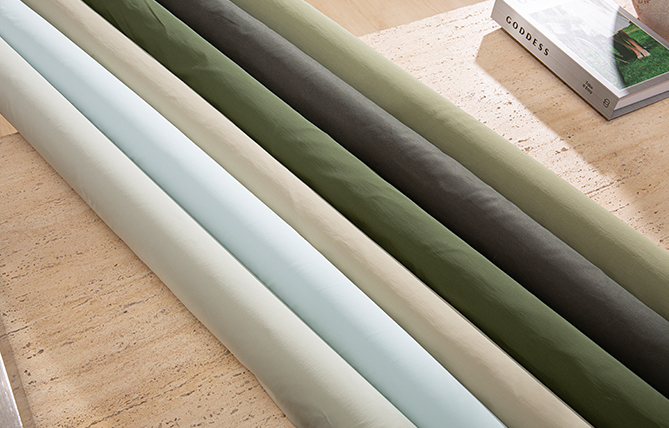
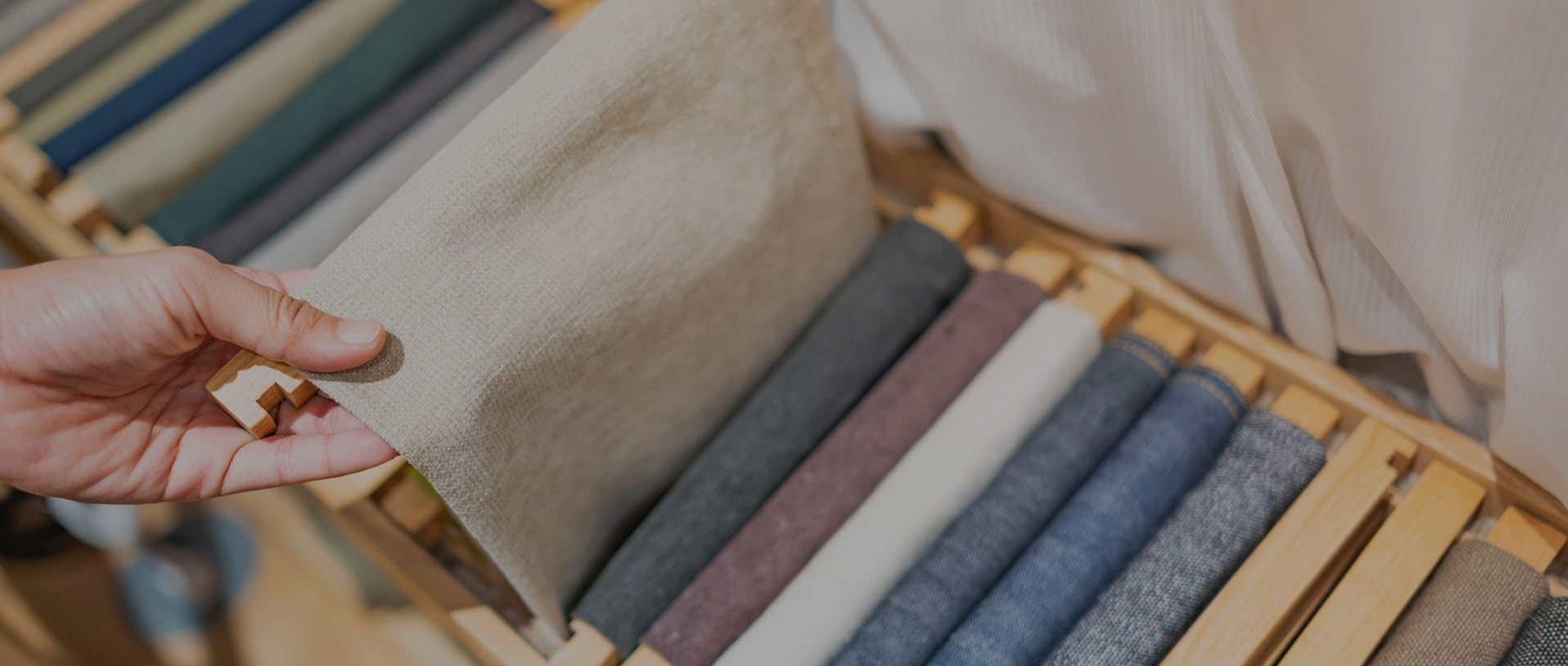
Focus on selecting high quality and environmentally friendly raw materials, establishing a stable supply chain and optimising inventory management.

Adopting advanced technology to ensure uniform colour, focusing on environmental protection and quality control.
Carry out diversified finishing to meet different needs and enhance the added value of fabrics.
Develop innovative products such as functional and eco-friendly fabrics to enhance market competitiveness.
Understand market needs, develop marketing strategies, provide quality customer service and achieve sales targets.

Our mission is to reduce our environmental footprint and foster sustainable practices. To achieve this, we meticulously manage our operations to consume fewer resources and exercise strict control over the use of raw materials that could potentially harm the environment. We opted to extract pure natural dyes directly from plants, which not only reduces the harm to human health from chemical dyes, but also increases natural renewable resources and significantly reduces the toxicity of dyeing wastewater. This approach ensures the conservation of natural resources and alleviates the burden of sewage treatment, ultimately contributing to the protection of our environment.

 2026-05-13
 The Short Answer: How to Finish a Stitch on a Sewing Machine To finish a stitch on a sewing machine, you have three main options:
 2026-05-06
 The Quick Answer: How to Tie the Sides of a Shirt To tie the sides of a shirt, pull the two front hem corners away from your body
 2026-04-23
 The most reliable way to sew the edges of fabric is to finish them immediately after cutting, before construction begins. Unfinis
 2026-04-20
 How Do You Line a Dress: The Direct Answer Lining a dress means attaching an inner layer of fabric — usually a lightweight wove
 2026-04-13
 The Short Answer: Yes, You Can Crochet an Edge on Woven Fabric — Here's How Crocheting an edge onto woven fabric is entirely po


 English