English
What is the most tightly woven fabric?
When it comes to the world's densely woven fabric, there isn't a single, absolute champion, as the definition of "dense" depends on whether it's for waterproofing, windproofing, or ultimate smoothness.
However, in everyday life and the professional textile industry, the following fabrics are renowned for their astonishingly high density:
Content
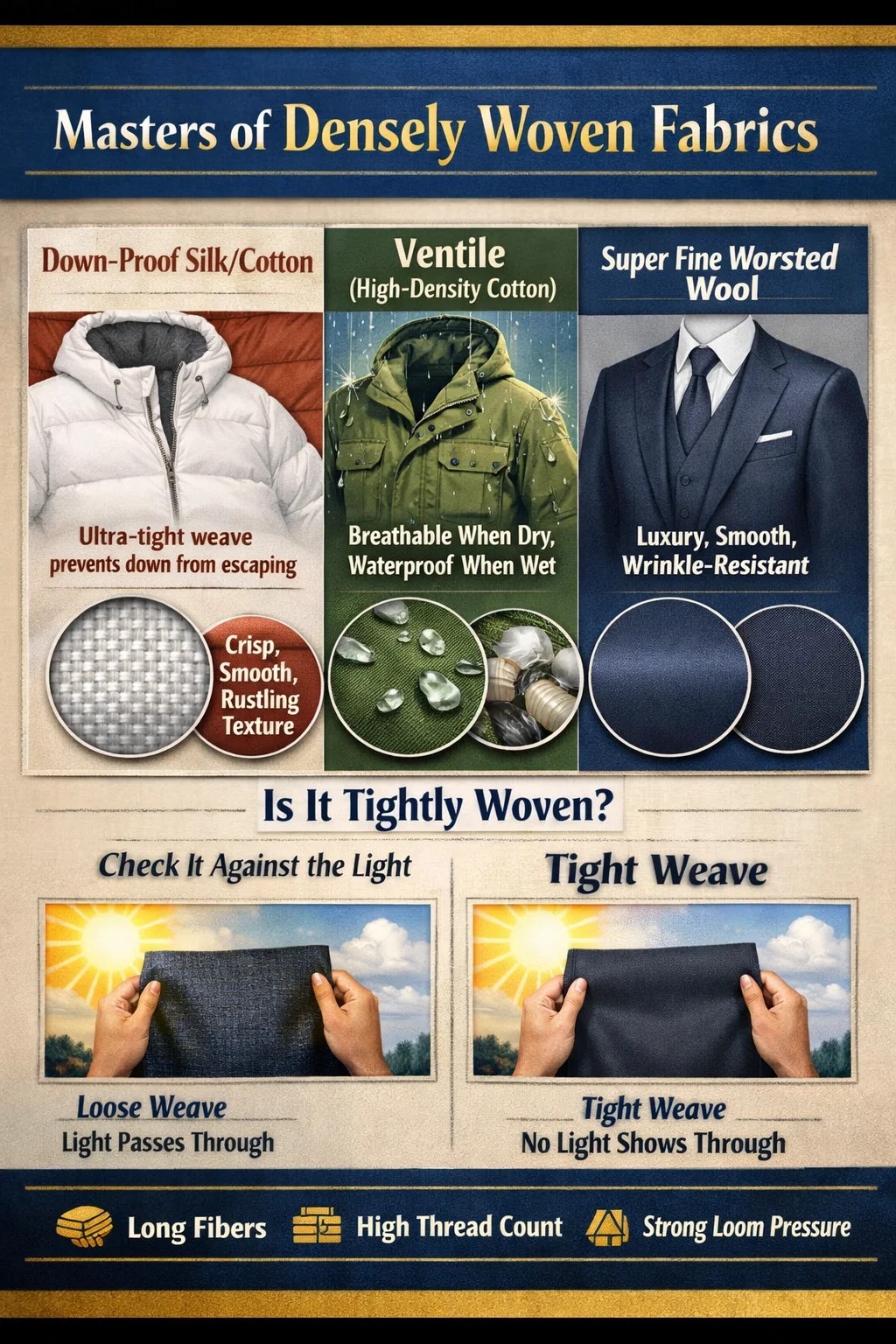
1. Down-Proof Silk/Cotton
This is an extremely dense woven fabric encountered in daily life.
Why so dense? Its original design purpose was "downproof," preventing the tiny feather tips from escaping from down jackets or comforters.
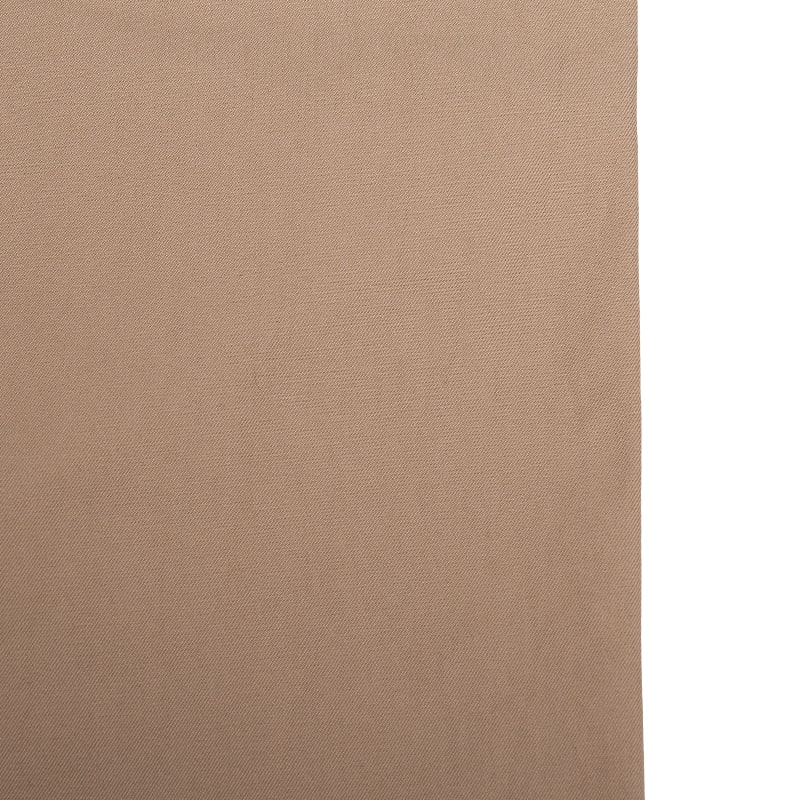
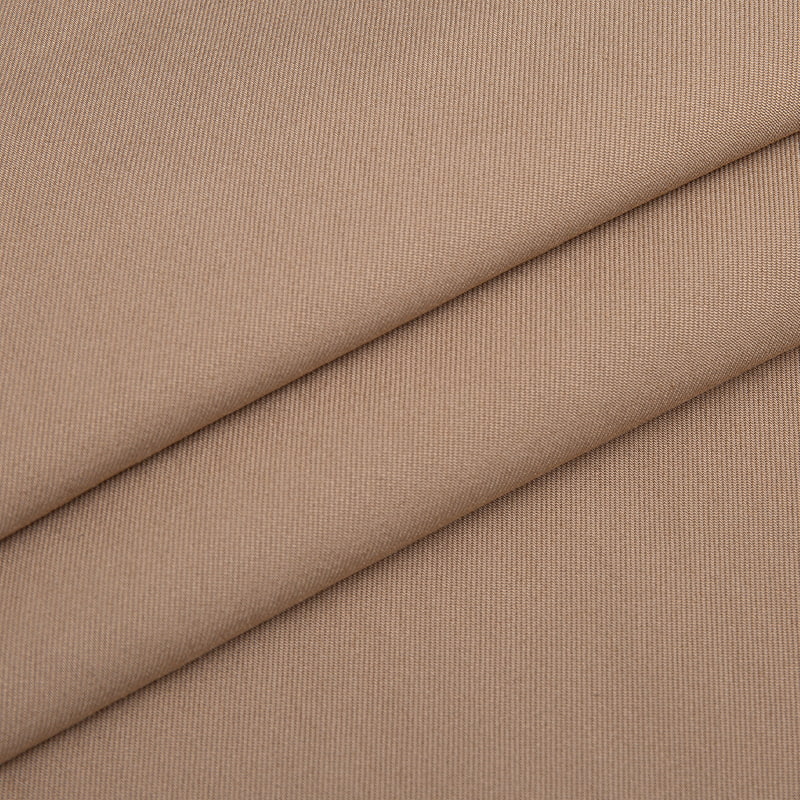
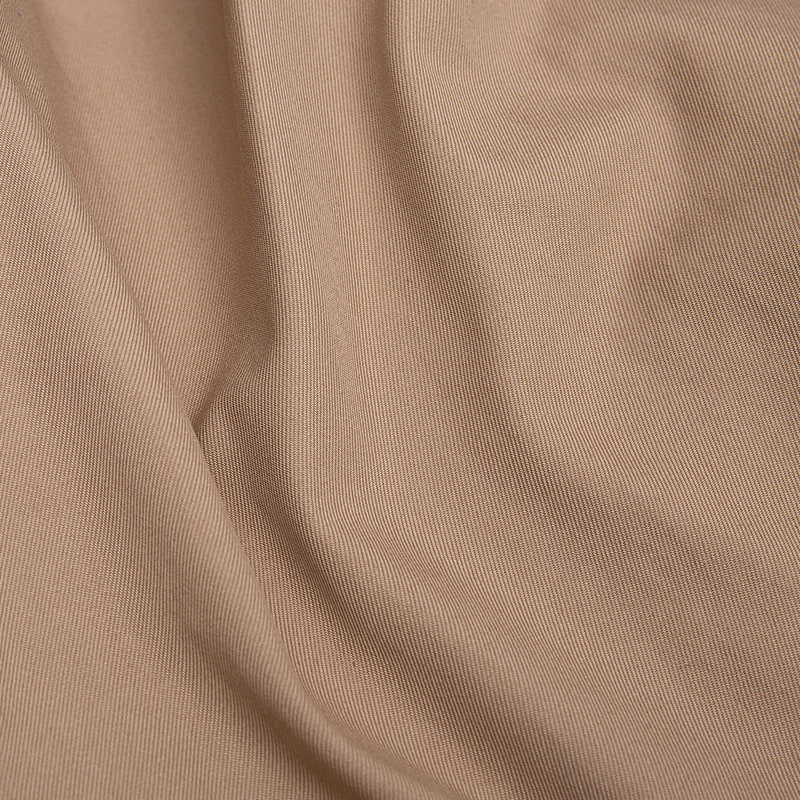
Characteristics: Extremely fine lines arranged so densely that they are impermeable to air. This fabric not only feels as crisp as paper, but also makes it difficult for air to pass through quickly.
Feel: Very smooth to the touch, even making a slight "rustling" sound when rubbed.
2. The "windproof legend": Ventile (high-density cotton)
This is a specialty woven fabric very famous in outdoor sports and military applications.
The Secret of Density: It uses the longest and finest cotton fibers, woven under extremely high pressure to compress the gaps between the threads to almost nothing.
Amazing Function: This fabric is breathable when dry, but once wet, the cotton fibers absorb moisture and swell, completely sealing any remaining tiny gaps, thus achieving a natural waterproof effect without the need for any chemical adhesives.
3. Super Fine Worsted Wool:
In the realm of high-end suits, this woven fabric represents the pinnacle of craftsmanship.
Weaving Process: The wool fibers used in this fabric are much finer than a human hair. Thousands upon thousands of these fine fibers are tightly interwoven together using high-precision looms.
Visual Effect: Its density is so high that you can't see any obvious weave; the surface is as smooth as a mirror, not only wrinkle-resistant but also naturally preventing water droplets from penetrating.
● Why can some fabrics be woven so densely?
To create such top-quality woven fabric, three conditions are typically required:
Long fibers: Only long, strong fibers (such as long-staple cotton or silk) can be drawn into extremely fine threads without easily breaking.
High thread count: Simply put, the threads must be fine enough. For the same area, the finer the thread, the more threads can be woven in.
Loom pressure: A very precise loom is needed to apply immense pressure to the warp and weft threads, forcing them to be tightly bound together.
● How to determine if a fabric is tightly woven?
The simplest and most common method is to look at it against the light.
Hold a piece of ordinary woven fabric up to a light source or the sun. If you can see light filtering through or noticeable gaps, it's loosely woven.
The finest tightly woven fabrics are almost imperceptible to light, appearing as a thick, solid layer.
 PREV
PREV