English
What woven fabric is similar to silk?
Content
- 1 The Definitive Answer: Which Woven Fabric is Most Similar to Silk?
- 2 Rayon and Viscose: The Original "Artificial Silk"
- 3 Cupro: The Secret Ingredient of Luxury Linings
- 4 Lyocell (Tencel): The Sustainable Silk Alternative
- 5 The Role of the Satin Weave in Mimicking Silk
- 6 Mercerized Cotton: The "Cotton Silk"
- 7 Summary of Practical Silk Substitutes
The Definitive Answer: Which Woven Fabric is Most Similar to Silk?
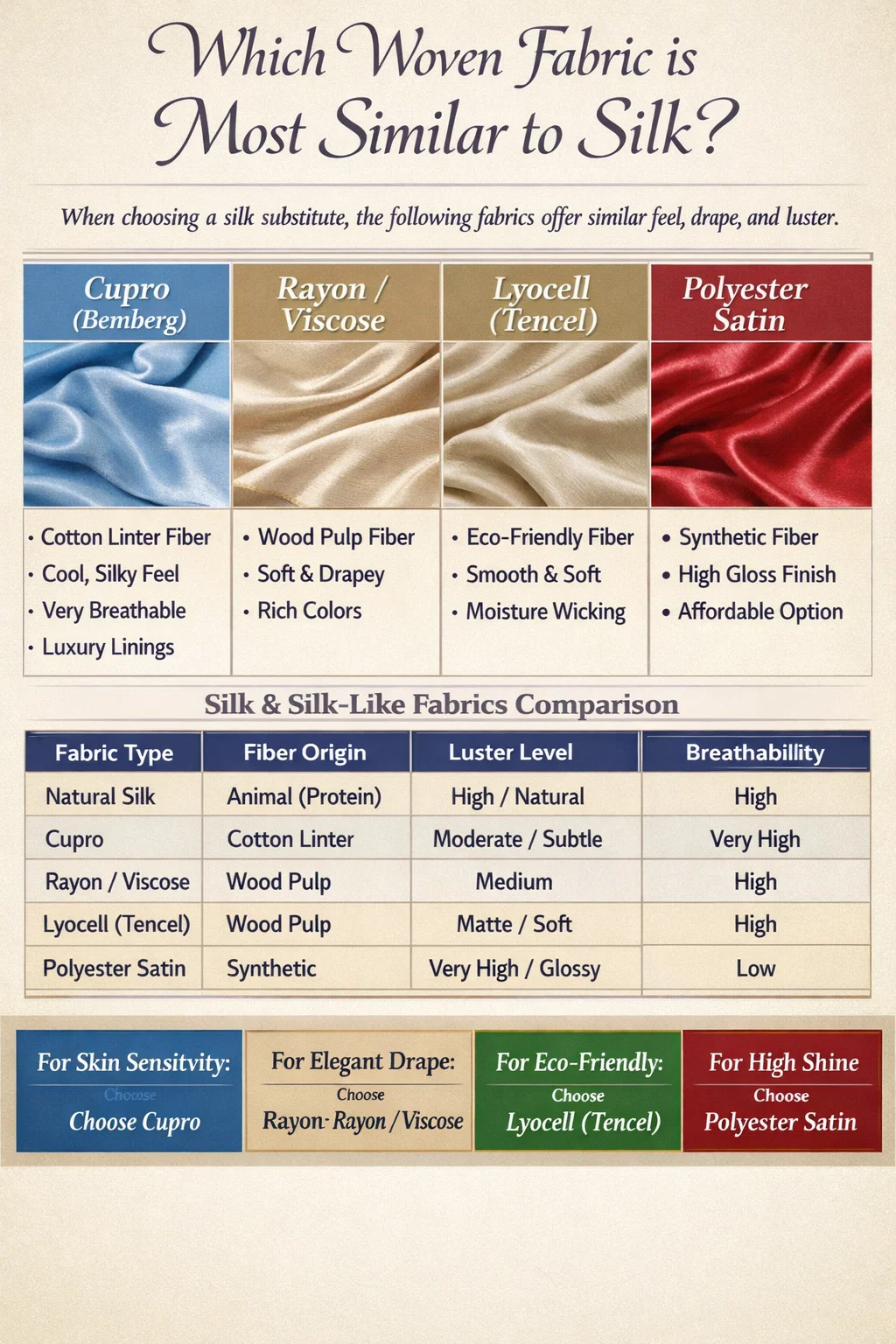
When searching for a woven fabric that replicates the luxurious feel, luster, and drape of natural silk, the most prominent contenders are Rayon, Cupro, and Lyocell (Tencel). Among these, Cupro is widely considered the closest match in terms of breathability and silken touch, while Satin-weave Polyester serves as the most common affordable synthetic alternative. These fabrics utilize specific weaving techniques to mimic the smooth protein fibers produced by silkworms.
Rayon and Viscose: The Original "Artificial Silk"
Rayon was historically engineered specifically to replace silk. It is a regenerated cellulose fiber made from wood pulp, processed into a smooth filament that reflects light similarly to natural silk. In a woven fabric construction, rayon provides a heavy drape that flows with the body, a trait highly sought after in dressmaking.
Viscose Properties
Viscose is the most common subtype of rayon. When used in a plain or twill weaving pattern, it creates a surface that is soft to the touch and highly absorbent. Unlike synthetic polyester, viscose does not trap static electricity, making it feel more like a natural fiber against the skin.
- Excellent moisture absorption, often surpassing cotton.
- High brilliance in color dyeing, mimicking the vibrant hues of silk.
- Prone to wrinkling, requiring careful maintenance.
Cupro: The Secret Ingredient of Luxury Linings
Cupro, often known by the brand name Bemberg, is a woven fabric derived from cotton linter—the ultra-fine fibers that stick to the cotton seed. It is frequently mistaken for silk because of its "cold" touch and incredibly fine filament structure.
This material is a staple in high-end tailoring. If you examine the interior lining of a bespoke Italian suit, you are likely looking at a cupro woven fabric. It slides over other garments without friction, exactly like a high-grade silk habotai or charmeuse.
| Fabric Type | Fiber Origin | Luster Level | Breathability |
|---|---|---|---|
| Natural Silk | Animal (Protein) | High/Natural | High |
| Cupro | Cotton Linter | Moderate/Subtle | Very High |
| Polyester Satin | Synthetic | Very High/Glossy | Low |
| Lyocell | Wood Pulp | Matte/Soft | High |
Lyocell (Tencel): The Sustainable Silk Alternative
Lyocell is often marketed under the brand name Tencel. As a woven fabric, it is prized for its eco-friendly production and its physical properties that bridge the gap between cotton and silk. While silk can be delicate and difficult to wash, Lyocell is much more robust while maintaining a peach-skin softness.
Why Tencel Mimics Silk
The fibers in Lyocell are incredibly smooth on a microscopic level. When these fibers are processed into a woven fabric with a high thread count, the result is a textile that drapes elegantly and feels exceptionally gentle on sensitive skin. It is frequently used for luxury bedding and high-end casual wear.
The Role of the Satin Weave in Mimicking Silk
It is important to distinguish between the fiber and the weaving technique. Many people confuse "silk" with "satin." Silk is a fiber; satin is a type of woven fabric structure. By using a satin weave—where the "floats" of yarn skip over several cross-yarns—any fiber can be made to look shiny and feel smooth.
Polyester Satin is the most widely produced silk-lookalike. Because polyester is a plastic-based filament, it can be extruded to be as thin as silk. When woven into a tight satin pattern, it produces a high-gloss finish. However, unlike real silk or cupro, woven fabric made of polyester does not breathe well, which can lead to discomfort in warm weather.
Mercerized Cotton: The "Cotton Silk"
Mercerization is a chemical treatment applied to cotton woven fabric that swells the fibers and creates a rounder cross-section. This process increases the surface area for light reflection, giving the cotton a silk-like luster.
Performance of Mercerized Woven Fabric
While it may not be as "slippery" as silk, mercerized cotton is much stronger and takes dye much more deeply. It is a fantastic woven fabric for those who want the appearance of silk but require the durability and easy care of cotton. You will often find this in high-end polo shirts and luxury bed linens.
Summary of Practical Silk Substitutes
Choosing the right woven fabric depends on your specific needs for a project or garment:
- For Luxury Drape: Choose Viscose or Rayon.
- For Skin Sensitivity and Coolness: Choose Cupro.
- For Durability and Shine: Choose Polyester Satin.
- For Environmental Consciousness: Choose Tencel Lyocell.
Each of these materials utilizes advanced weaving methods to provide a tactile experience that was once exclusive to the elite who could afford pure silk.
 PREV
PREV